How to Choose the Right Hair Colour for Your Skin Tone
Nail Art
September 17, 2026
admln
Ever saved a hair colour photo and wondered whether the same shade would actually suit you? Hair colour can look quite different from one person to another. Your skin tone, undertone, natural or current hair colour, and even the amount of maintenance you’re comfortable with can all influence the final look.
When choosing a hair colour for your skin tone, it’s helpful to look beyond complexion alone. Your undertone, natural hair colour, eye colour, hair condition, lifestyle, and the type of change you want can all influence which shade and colouring technique may work well for you.
Whether you’re considering global hair colour, highlights, balayage, or ombré, understanding how different shades work with your complexion can help you make a more informed choice.
At Elements Unisex Salon in Mira Road, stylists consider factors such as skin tone, natural hair colour, hair texture, existing colour, and personal style when helping clients select a suitable colour.
Why Does Skin Tone Matter When Choosing Hair Colour?
Hair colour sits close to your face, so the shade you choose can influence how your overall appearance comes together.
A colour that doesn’t look the way you expected isn’t necessarily a bad colour. It may simply create a different level of warmth or contrast from what you had in mind.
When selecting a shade, your stylist may consider:
• Skin tone
• Skin undertone
• Natural or current hair colour
• Eye colour
• Hair texture and condition
• Existing colour
• Desired maintenance
• Personal style
Your preferred look matters too. Someone looking for a subtle change may choose a shade close to their natural colour, while someone wanting a more noticeable transformation may prefer greater contrast.
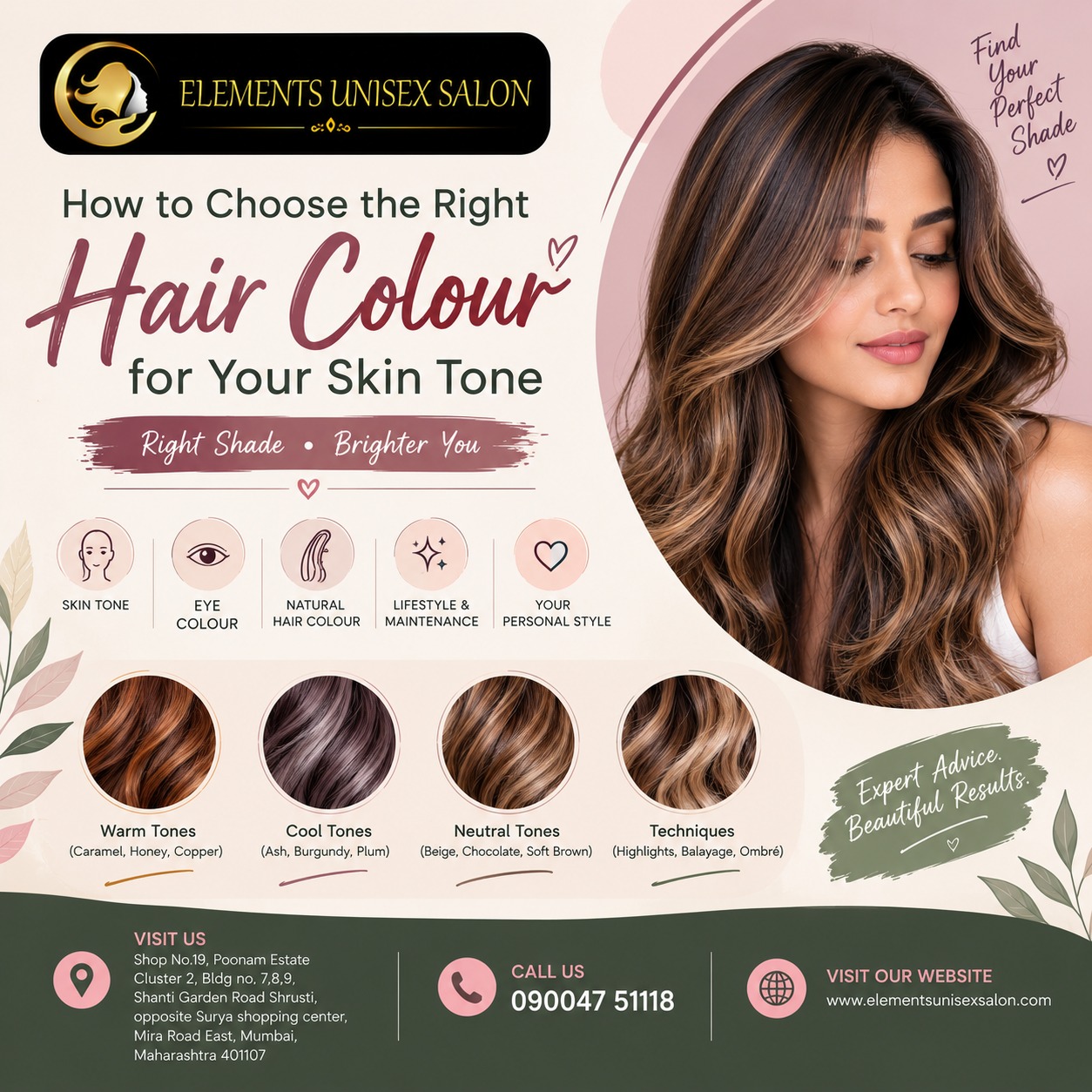
Hair Colours for Warm Undertones
If your skin has golden, peachy or yellow undertones, warmer shades can create a soft and harmonious appearance.
Depending on how subtle or bold you want the change to be, you could explore:
• Caramel
• Honey
• Warm chocolate
• Copper
• Golden brown
You don’t necessarily have to choose an intensely warm shade. A professional colour consultation can help you understand which level of warmth works with your complexion and existing hair.
Hair Colours for Cool Undertones
Depending on your natural hair colour and desired look, shades that may complement cooler undertones include:
• Ash brown
• Cool chocolate
• Burgundy
• Plum
• Cool black
• Ash blonde
• Beige blonde
The final choice should still take your existing hair colour and overall appearance into account. A shade that looks cool in a reference photo may appear different once applied to another hair base.
Hair Colours for Neutral Undertones
Neutral undertones generally give you more flexibility when moving between warm and cool colour families.
Some shades you could consider include:
• Chocolate brown
• Natural brown
• Beige
• Soft caramel
• Burgundy
• Neutral blonde
• Dark brown
Rather than choosing a shade simply because it is labelled warm or cool, consider how it works with your natural hair and the overall look you want to create.
How to Choose Hair Colour Based on Your Natural Hair Colour
Your natural or current hair colour is another important part of the decision. The same shade may produce very different results on black, brown, light brown or previously coloured hair.
Black or Very Dark Hair
If you have naturally dark hair, rich shades such as chocolate brown, burgundy, caramel highlights or warm brown can add dimension without completely changing your base.
For a more noticeable transformation, techniques such as balayage or highlights can introduce lighter tones while keeping some of your natural depth.
Brown Hair
Brown hair offers plenty of possibilities, depending on how much you want to change your existing colour.
You can explore shades such as:
• Caramel
• Honey
• Chocolate
• Ash brown
• Copper
• Burgundy
• Golden brown
Your existing shade and hair condition will influence how the new colour develops.
Light Brown Hair
Light brown hair can work with both warmer and cooler colour families. Depending on your complexion and desired result, options may include beige, caramel, honey, ash or other complementary shades.
Because the base is already relatively light, your colourist can assess whether you need a simple colour application or a different technique to achieve the result you’re after.
Already Coloured Hair
If your hair has been coloured previously, the existing colour should be assessed before choosing a new shade.
Previous colour, bleaching and chemical treatments can affect how a new colour develops. In some cases, achieving a significantly lighter or different result may require additional steps rather than simply applying another colour over the existing one.
Global Hair Colour for Different Skin Tones
Global hair colour involves applying colour throughout the hair for a consistent overall look.
It can be suitable if you want:
• A complete colour transformation
• A consistent shade throughout the hair
• Grey coverage
• A darker or lighter overall appearance
• A polished, uniform finish
If you’re considering an all-over colour, you can explore the global hair colour service in Mira Road at Elements Unisex Salon. The salon’s colourists consider factors such as skin tone, lifestyle, hair type and the desired look when selecting a colour.
Choosing Highlights for Your Skin Tone
Highlights can be a good option if you don’t want to colour your entire head. They can add brightness and dimension while allowing your natural base colour to remain visible.
Depending on your complexion and natural hair colour, your stylist may suggest different tones and placements.
If you prefer this type of transformation, you can explore hair highlights in Mira Road, where the colour and placement can be discussed according to your existing hair and desired look.
Highlights for a Subtle Look
If you want a softer transformation, shades that are relatively close to your natural hair colour can create gentle dimension without a dramatic change.
Highlights for a More Noticeable Look
A greater contrast between your base and highlight shade can create a more noticeable effect.
Placement matters too. Face-framing highlights, for example, can bring additional brightness around the face, while highlights distributed through the hair can create overall dimension.
Is Balayage Suitable for Your Skin Tone?
Balayage uses a hand-painted technique to create a softer, blended colour effect.
The shade and placement can be customised according to your:
• Natural hair colour
• Skin tone and undertone
• Hair texture
• Hair length
• Desired level of contrast
You can also explore the balayage hair colour service at Elements Unisex Salon, where the colour approach can be considered around your existing base, hair texture, length and desired appearance.
Balayage can be a useful option if you want added dimension without changing the entire head of hair.
What About Ombré Hair Colour?
Ombré creates a gradual transition from a darker shade near the roots to a lighter shade toward the ends.
The effect can range from a subtle, natural gradient to a more noticeable colour contrast or fashion colour.
If this is the type of look you’re considering, you can explore Ombré Hair Colour in Mira Road, with the colour intensity and blending adjusted according to your preferred look, existing hair and complexion.
Keeping the roots closer to your natural colour can also make regrowth less noticeable than with some all-over colour applications.
How to Choose Between Global Colour, Highlights, Balayage and Ombré
Skin tone is only one part of the decision. The colouring technique you choose can make just as much difference to the final appearance.
| Colour Technique | Best For |
| Global Colour | A consistent all-over transformation |
| Highlights | Adding brightness and dimension |
| Balayage | A soft, blended and natural-looking effect |
| Ombré | A gradual dark-to-light transition |
Your maintenance preference should also be part of the decision. Global colour can make root regrowth more noticeable, while techniques such as balayage and ombré can create a softer grow-out effect.
If you’re unsure which hair colouring technique fits the look you’re after, comparing the techniques, maintenance requirements and overall effect can help narrow down your options.
Consider Your Lifestyle Before Choosing a Colour
A colour can look great but still be inconvenient if its maintenance doesn’t fit your routine.
• Before choosing a shade or technique, consider:
• How often you can visit a salon
• How much maintenance you’re comfortable with
• Whether you want regular root touch-ups
• Your daily styling routine
• How frequently you use heat tools
• Whether you’re willing to maintain the colour at home
If you have a busy schedule, a blended colour technique may be easier to manage because the transition between your natural hair and coloured sections can appear softer as the hair grows.
Don’t Choose a Hair Colour From a Photo Alone
Reference photos are useful when communicating your preferred style, but the exact result may differ depending on your existing hair.
The same colour formula can look different depending on:
• Natural hair colour
• Previous colour
• Hair porosity
• Hair texture
• Lighting
• Skin tone
• Hair condition
Instead of asking for an exact copy of a photograph, show your stylist the overall look you like and allow them to recommend a shade suitable for your hair.
Why Professional Hair Colour Consultation Matters
Professional consultation can help prevent unrealistic expectations.
Before colouring, your stylist can consider your current hair colour, condition, skin tone, desired result, and maintenance preferences.
At Elements Unisex Salon, consultation is part of the colour-selection process, with stylists considering the client’s hair and desired look before choosing a suitable technique and tone.
This is particularly important if you are considering a significant colour change or have previously coloured or chemically treated hair.
How to Maintain Your New Hair Colour
Choosing the right colour is only the beginning.
To maintain your colour for longer:
Use Suitable Hair-Care Products
Choose products recommended for coloured hair and follow your stylist’s aftercare instructions.
Avoid Excessive Heat
Frequent high-temperature styling can contribute to dryness and affect the overall appearance of treated hair.
Condition Regularly
Regular conditioning can help maintain softness and manageability.
Don’t Wash More Than Necessary
Your stylist can recommend a washing routine based on your scalp and hair type.
Schedule Appropriate Touch-Ups
The timing of your next appointment depends on the technique, colour, natural hair growth, and desired appearance.
Final Thoughts
Choosing the right hair colour for your skin tone isn't simply about picking a shade from a colour chart. Your skin undertone, natural hair colour, hair condition, lifestyle, desired look, and maintenance preferences all play a role.
Whether you're considering global hair colour, highlights, balayage, or ombré, a professional consultation can help you choose a colour that works with your individual features rather than simply following a trend.
Speak with an Elements Unisex Salon colourist before your next colour appointment and find a shade that complements your skin tone, hair, and personal style.
Good to Know
Frequently Asked Questions
Start by considering your skin undertone, natural hair colour, and desired look. Warm, cool, and neutral undertones can work with different colour families, but a professional consultation can help determine a shade that complements your overall appearance.
Neither is universally better. Global colour creates a more uniform overall transformation, while highlights add dimension without colouring the entire head. Your choice should depend on your desired look, maintenance preference, and hair condition.
Maintenance depends on the colour and how close it is to your natural hair. Balayage can offer a softer grow-out because the colour is blended through the hair, while global colour can make root regrowth more noticeable.