Female Hair Loss Solutions: Common Causes, Everyday Hair Care and How a Salon Can Help
Hair Care Treatment
October 27, 2026
admln
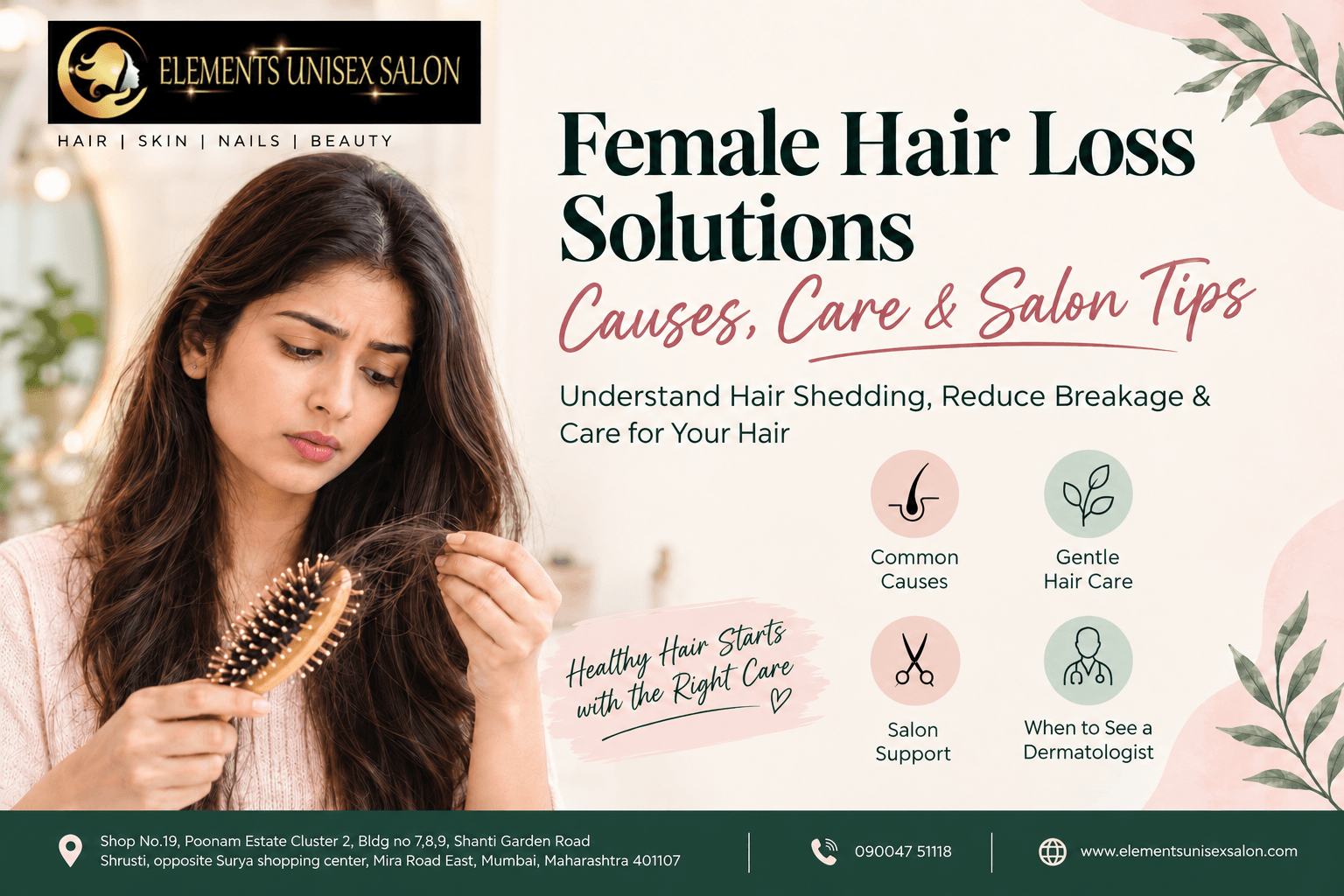
Hair is often closely connected to how we feel about ourselves. Whether you prefer long, flowing hair, a short and stylish haircut, or a simple everyday look, noticing more hair than usual on your pillow, comb or bathroom floor can be worrying. For many women, hair thinning and breakage can affect their confidence and make everyday styling more difficult.
If you are searching for female hair loss solutions, the first step is understanding what is happening to your hair. Not every strand that falls is a sign of permanent hair loss. Sometimes, the problem is hair breakage caused by dryness, heat styling, chemical treatments or rough handling. In other cases, the hair may be shedding from the roots because of hormonal changes, nutritional deficiencies, stress or an underlying medical condition.
The good news is that there are practical ways to care for fragile hair, minimise avoidable damage and make your hair look healthier. Professional salon services can support your haircare routine, while a dermatologist can help identify and treat medical causes of hair loss.
At Elements Unisex Salon, we believe that better haircare starts with understanding your hair’s needs rather than following every new trend. This guide explains common causes of female hair loss, everyday solutions and how professional salon care can become part of a more thoughtful haircare routine.
What Is Female Hair Loss and Why Does It Happen?
Female hair loss can appear in different ways. Some women notice increased shedding while shampooing, while others experience a wider parting, reduced hair volume or gradual thinning around the crown.
It is important to distinguish between two common concerns:
• Hair shedding: Hair strands fall out from their follicles. This can happen temporarily or because of a medical condition.
• Hair breakage: Hair fibres snap along their length, often because they have become weak, dry or damaged.
These problems can occur together, but they do not always have the same causes or solutions.
Understanding the difference helps you choose the right next step instead of spending money on products or treatments that may not address your concern.
Common Causes of Hair Loss in Women
1. Stress and Lifestyle Changes
Periods of significant physical or emotional stress can trigger increased hair shedding in some women. Illness, surgery, major life changes and other stressful events may also contribute.
Hair shedding related to these triggers may become noticeable weeks or months after the event. If the shedding is persistent, severe or unexplained, consult a dermatologist rather than assuming stress is the only cause.
Maintaining a balanced lifestyle, getting adequate sleep and following a gentle haircare routine can support general wellbeing, although these habits cannot replace medical assessment when needed.
2. Hormonal Changes
Hormonal changes associated with pregnancy, childbirth, menopause and certain medical conditions may affect the hair growth cycle.
Some women notice temporary shedding after childbirth, while others experience gradual thinning over time. Because the causes vary, the right approach depends on an individual assessment.
A salon can help you manage the appearance and styling of your hair during these changes, but hormonal hair loss may require medical advice and treatment.
3. Nutritional Deficiencies
Insufficient intake or absorption of certain nutrients, including iron and protein, may contribute to hair loss in some people. However, taking supplements without knowing whether you have a deficiency is not always helpful and may sometimes cause harm.
If you are experiencing unexplained shedding, speak with a healthcare professional about whether dietary assessment or blood tests are appropriate.
Avoid relying on hair-growth supplements or salon products that promise guaranteed regrowth.
4. Excessive Heat Styling
Frequent use of straighteners, curling irons and high-temperature blow-dryers can weaken the hair fibre and increase breakage.
This can make hair appear thinner, particularly around the ends, even when the problem is not hair loss from the follicles.
Using lower heat settings, applying suitable heat protection and allowing your hair to air-dry when practical can help reduce avoidable damage.
5. Chemical Processing and Hair Damage
Repeated bleaching, colouring, straightening or other chemical services can affect hair strength, especially when the hair is already fragile or the services are performed too frequently.
Damaged strands may become rough, tangled and more likely to snap during brushing.
If you are noticing increased breakage, consider reducing chemical processing and asking a qualified stylist to assess your hair’s condition before your next service.
6. Tight Hairstyles and Rough Handling
Frequently wearing tight ponytails, buns or braids can place continuous tension on the hair follicles. Over time, this may contribute to traction alopecia, a type of hair loss associated with pulling.
Aggressive brushing, rubbing wet hair with a rough towel and repeatedly detangling knots can also contribute to breakage.
Choose comfortable hairstyles, use gentle detangling techniques and avoid styles that cause pain or persistent tension.
Female Hair Loss Solutions: What Can You Do at Home?
Before trying expensive products or treatments, review your everyday haircare habits. Simple changes can help protect fragile hair from additional damage.
Choose a Gentle Shampoo and Conditioner
Use a shampoo suitable for your scalp and hair type. If your scalp is oily, you may need to wash more frequently than someone with a dry scalp.
Apply conditioner to the lengths and ends to improve slip and make detangling easier. A leave-in conditioner may also help reduce friction if your hair is particularly prone to tangling.
Remember that shampoos and conditioners can improve hair condition, but they do not necessarily treat hair loss originating at the follicles.
Reduce Heat and Chemical Stress
Give your hair a break from frequent heat styling and avoid overlapping chemical treatments on already damaged lengths.
If you are experiencing significant shedding or breakage, postpone non-essential chemical services until you understand what is happening.
Brush and Detangle Carefully
Start detangling from the ends and gradually work towards the roots. Use a suitable brush or wide-tooth comb, depending on your hair texture.
Avoid pulling forcefully through knots, particularly when the hair is wet and vulnerable to mechanical damage.
Avoid Tight Hairstyles
Switch between loose hairstyles and avoid repeatedly pulling the same sections of hair. If your hairstyle causes discomfort, headaches or tenderness around the hairline, loosen it.
Persistent traction can cause damage that becomes difficult to reverse.
Eat a Balanced Diet
Include a variety of protein-rich foods, vegetables, fruits and other nutrient-dense foods in your diet. If you suspect a nutritional deficiency, seek professional medical advice instead of starting high-dose supplements independently.
A balanced diet supports general health, but no single food or home remedy guarantees hair regrowth.
How Can a Salon Help Women Experiencing Hair Loss?
A salon cannot diagnose the medical cause of hair loss or guarantee that hair will regrow. However, professional haircare can play a useful supporting role when the concern involves dryness, tangling, breakage or difficulty managing fragile hair.
The key is to choose appropriate services based on your hair’s condition rather than assuming that every salon treatment is suitable.
1. Professional Hair and Scalp Care Consultation
A conversation with an experienced stylist can help you explain your concerns, describe your current haircare routine and identify habits that may be contributing to visible damage.
A stylist can assess the condition of the hair fibre, discuss styling practices and help you decide whether to postpone services that could put additional stress on fragile hair.
A salon consultation is not a medical diagnosis. If you have sudden shedding, bald patches, a widening parting, scalp inflammation or ongoing thinning, consult a dermatologist.
At Elements Unisex Salon, our focus is on understanding your haircare goals and discussing suitable salon services before proceeding.
2. Hair Spa for Dry, Weak and Difficult-to-Manage Hair
Hair that feels rough, dry or tangled can be difficult to manage. Conditioning treatments may help improve softness, smoothness and manageability, making everyday detangling easier.
A suitable hair spa may be useful when your primary concern is dryness or cosmetic damage rather than unexplained hair loss.
Explore our guide to the benefits of a hair spa to understand what this service can offer as part of a regular haircare routine.
An important distinction: A hair spa is not a proven cure for medical hair loss. It may help reduce breakage associated with damaged hair, but it cannot reliably stop shedding caused by hormonal conditions, nutritional deficiencies or other medical problems.
If your scalp is irritated or unusually sensitive, seek appropriate advice before undergoing a scalp treatment.
3. Haircuts That Make Thinning Hair Easier to Style
When hair volume decreases, choosing a suitable haircut can make a noticeable difference to the overall appearance.
Depending on your hair texture and preferences, a stylist may suggest:
• A shoulder-length cut that is easier to manage.
• A blunt cut that creates a fuller-looking outline.
• Soft layers that add movement without removing too much density.
• A shorter hairstyle that reduces tangling and styling time.
The best choice depends on where your hair is thinning, how much density you have and the finish you prefer.
A haircut does not increase the number of hair follicles or treat the cause of hair loss. It can, however, help you feel more comfortable with your current hair while you address the underlying concern.
4. Personalised Styling for Fine or Thinning Hair
Fine hair can sometimes look flatter when weighed down by heavy products or styled without considering its natural texture.
A professional stylist can recommend a suitable parting, haircut and styling approach to create the appearance of more volume without pulling on fragile strands.
Avoid excessive teasing, tight extensions or styling methods that place unnecessary tension on the hair.
For women who feel self-conscious about visible thinning, small styling adjustments can make everyday grooming feel easier and more manageable.
5. Be Careful with Smoothening, Straightening and Chemical Services
Women experiencing hair loss sometimes consider smoothening or straightening because these treatments promise easier-to-manage hair.
However, these services are not hair-loss treatments. Chemical processing and heat may worsen breakage in already fragile hair, depending on the hair’s condition and the procedure used.
If your main concern is active shedding or significant breakage, do not rush into a chemical service.
You can read about the options available at Elements Unisex Salon’s hair straightening and smoothening. Use this information to understand the services, not as a recommendation to undergo them while experiencing hair loss.
Discuss your hair history with a qualified stylist, and postpone potentially damaging services if your hair is weak or your scalp is irritated.
When Should You See a Dermatologist for Hair Loss?
Professional medical advice is particularly important if you notice:
• Sudden or rapidly increasing hair shedding.
• Round or irregular bald patches.
• A progressively wider parting or visible scalp.
• Hair loss accompanied by itching, pain, redness or scaling.
• Persistent shedding that continues for several months.
• Hair loss alongside other unexplained health changes.
A dermatologist can examine your scalp, review your medical history and determine whether further investigations are necessary. Depending on the cause, treatment may involve addressing a deficiency, managing a medical condition or using an evidence-based hair-loss treatment.
Do not delay medical assessment in favour of repeated salon treatments if the problem is getting worse.
How to Build a Better Haircare Routine with Salon Support
A practical routine combines gentle home care with professional services when appropriate.
Step 1: Understand your concern. Notice whether you are seeing strands with roots attached, short broken pieces or both. This observation cannot diagnose the cause, but it can help you describe the problem.
Step 2: Reduce unnecessary damage. Limit high heat, avoid tight hairstyles and handle wet hair gently.
Step 3: Seek medical advice when needed. Persistent or unexplained shedding should be evaluated by a dermatologist.
Step 4: Choose suitable salon services. If dryness, tangling or damaged lengths are your main concerns, discuss whether conditioning, a suitable haircut or gentler styling would help.
Step 5: Review your progress. Follow your healthcare professional’s advice and avoid repeatedly switching between products and treatments that promise quick regrowth.
At Elements Unisex Salon, we encourage customers to make informed choices and prioritise the condition of their hair before deciding on a beauty service.
Why Choose Elements Unisex Salon for Professional Haircare?
Finding the right salon is about more than getting a new hairstyle. It is about receiving personalised guidance, understanding available services and choosing an approach that suits your hair.
At Elements Unisex Salon, Mira Road, customers can explore professional haircare and styling options based on their individual preferences.
Our services include hair spa, haircuts, styling and other hair treatments. Depending on your hair’s condition, a stylist can discuss suitable cosmetic care options and explain when a service may not be appropriate.
If you are looking for a salon to support your everyday haircare routine, you can contact Elements Unisex Salon.
Final Words
Experiencing hair thinning or excessive shedding can be frustrating, especially when you have already tried different oils, shampoos and home remedies. The most helpful approach is to understand the problem first, protect your hair from unnecessary damage and seek professional advice when the shedding persists.
Remember that healthy-looking hair is not always the same as healthy hair growth. While salon services can improve softness, manageability and the appearance of damaged strands, treating the underlying cause of hair loss may require medical care.
At Elements Unisex Salon, we believe that every haircare journey should begin with informed choices and personalised attention. Whether you need a manageable haircut, suitable conditioning care or guidance on our professional hair services, our team is here to help you explore your options.
Contact Elements Unisex Salon to learn more about our services and plan your next salon visit.
Good to Know
Frequently Asked Questions
The right solution depends on the cause. Gentle haircare, reduced heat styling and avoiding tight hairstyles can minimise preventable damage. Hair loss caused by hormonal changes, nutritional deficiencies or medical conditions may require assessment and treatment from a healthcare professional.
A hair spa may improve softness and manageability and can help reduce breakage in dry, damaged hair. However, it cannot be relied upon to stop hair shedding caused by medical conditions or to stimulate proven hair regrowth.
Hair shedding involves strands released from their follicles, while breakage occurs when hair fibres snap along their length. Both can happen together. A dermatologist can help assess persistent or unexplained hair loss.
Yes, in a supportive cosmetic role. A stylist can suggest suitable haircuts, gentler styling techniques and appropriate conditioning services to improve manageability and the appearance of fine hair. A salon cannot diagnose or treat the underlying medical causes of hair loss.
Smoothening is not a treatment for hair loss. Chemical processing and heat may worsen breakage in fragile hair. If you are experiencing active shedding or substantial damage, seek medical advice when appropriate and discuss your hair condition with a stylist before proceeding.